Saturday, 28 March 2026

Japan's Fear of Immigration.

Creating a strict policy on immigration, is it based on fear or fact?

In many places around the world recently, we have seen countries taking a strong stand and implementing critical measures to address immigration and the movement of people across their borders. In the U.S., President Donald Trump has initiated efforts to round up individuals and deport them to their home countries. In Europe, protests have erupted in several countries against immigration policies, with demonstrators calling for strict measures or even advocating for the removal of immigrants and their return to their home countries.

In Japan, right-wing parties are calling for immigrants to either be removed and sent back to their home countries or for immigration to be completely halted. Many critics have labeled this rhetoric as fear-mongering employed by certain parties, which, in the last election, aimed to scapegoat immigrants for social issues in the country to gain support. It may be hard to believe, but this tactic actually worked, resulting in a far-right political party in Japan gaining a significant number of seats in the previous election.

Let's take a look at the background of Japanese immigration. Japan has a history of isolation, rooted in its fear of outside influences, particularly regarding foreign religious ideas. This period of isolation lasted almost 200 years. During this time, Japan only opened a small part of its country to outside interaction, especially for trade, but this was very restricted to certain countries. Throughout this period, many Japanese developed a strong cultural identity and created various cultural ideologies that continue to be influential in modern Japan.

The Isolation Period ended only when the US Navy ship, powered by a steam engine at the time, sailed into Tokyo Bay, captained by Mathew Perry, with a Letter from the US president, Millard Fillmore, demanding Japan open its port for trading.

During this era of isolation, Japan and its people developed a very strong sense of nationalism and a homogeneous culture. They were able to unify everyone and eliminate divisions among different groups, transforming them into one people. The Japanese developed what is called homogeneous societies, where everyone looks the same, dresses the same, and behaves similarly. Anyone who does not look the same, speak the same, or behave like the majority is often considered an outsider.

Even today, the fear of not looking, speaking, or acting like the traditional perception of a Japanese person is still prevalent. This fear, along with misconceptions and blame, contributes to the immigration issues in Japan. Japan is fundamentally different from the United States, where the country has historically been a melting pot of cultures, new ideas, identities, and changes. Despite today's modernisation and globalisation, Japanese society remains very rooted and conservative.

Fast forward to today, and here we are, the rhetoric of immigration and the immigrants' problem is soaring due to what is happening in the US under Dold trump and maybe some countries in Europe.

But the question I want to ask everyone, including Japanese, is: do immigrants and immigration really contribute to societal problems, or are these societal problems scapegoated by blaming immigrants?

Let's look at some common immigration rhetoric in Japan.


Increase crime.

Japan is a society that emphasizes common sense. Having lived in Japan for six years, I have come to realize how people have shaped this society in a way that encourages individuals to seamlessly follow the rules and systems established by the community. Honestly, when I first arrived in Japan, I was very surprised by how people lived and moved. Their lives seemed almost robotic, as they adhered to norms without questioning anything. Because the Japanese are made to follow every law. Japan is considered one of the safest countries in the work and that is for sure compared to my country. Like every country in the world, Japan has its fair share of crime. However, compared to other G7 countries, crime is at its lowest, around 0.23, compared to the US at 5.76, the highest.

Recently, many Japanese people have taken to social media to express their concerns about crimes committed by immigrants, suggesting that immigrants are responsible for an increase in crime in Japan. This fear is particularly prominent among less-informed individuals and some politicians. However, based on statistics, immigrant populations are often unfairly blamed for these claims. The fear being spread on social media is unfounded and proliferates like wildfire. According to several sources, crime rates in Japan involving foreigners are either decreasing or stabilizing.

In fact, the opposite is true: the crime rate committed by Japanese individuals stands at 95% of all crimes, while for foreigners it is just 7%. The sources also pointed out that the most serious crimes are committed by Japanese individuals, not foreigners. Crimes committed by foreigners are mostly related to theft, shoplifting, and drugs.


Crime Statistics by Nationality (2023)

Nationality

Arrested Persons

Japanese Nationals

167,744

Foreign Residents

15,525

Total

183,269

Breakdown of Foreign Resident Arrests

Foreign Resident Category

Arrested Persons

Visiting Foreigners

11,534

Resident Foreigners

3,991

Total

15,525


According to the 2023 statistics, the total number of people arrested for the social issue known as "panel code" offenses in Japan stands at 183,269. Can you believe that of this figure, 168,744 were Japanese nationals? That is approximately 91.5%. Meanwhile, foreign residents, including visitors, accounted for only 15,525 arrests, which is about 8.5% of the total.

When comparing these statistics and data, it can be concluded that a majority of crimes in Japan are committed by Japanese nationals. However, there has been a surge of misinformation and fear directed towards foreigners and immigrants, leading to them being scapegoated for a crime rate that is primarily caused by Japanese individuals or is, in fact, decreasing over the last two years.

Loss of Japanese identity.

This argument is one of the craziest and most unfounded ones I have heard from many Japanese people, and even their leaders. This argument is baseless and totally based on fear-mongering. It was this fear that drove Japanese society into isolation for some 200 years, and it is so crazy to see this fear showing itself again, and this time it is fueled by similar thinking.

Since I came here, I realized that Japanese culture and identity are very much alive compared to other countries. This is because about 90% of Japanese people speak Japanese, through which they receive all their information about the outside world. Most of these Japanese sources choose what they want Japanese people to know and what not to hear.

If you ask them about foreign history, most of the time they have no idea. Even about major world events and powerful leaders that shape our world, etc., they have little knowledge. Yet they complain about losing their identity. What I observe here is that Japanese society is already influenced by globalization and other cultures. Their culture now is an evolution based on global influences. So what kind of identity do they think they are losing? They accepted food culture and writing systems from China. They adopted industrial culture and corporate ideas from America. They love curry and rice, which comes from India. So what kind of cultural identity are they referring to when their culture is constantly changing?

I think their fear is about seeing other people who are not like them—ethnic non-Japanese coming here, growing, adapting, and bringing new cultures, and changing the face of Japan into a multicultural society.

It is true, as pointed out in some reports, that many foreigners might not understand the culture and certain etiquette of society, such as noise, trash sorting, etc. But these are things that can be fixed if there is a proper system established to help foreigners adapt to Japanese culture. When I first moved here, no one told me about these rules, and I  admit I made a few mistakes and misunderstood things because I did not know them. Japanese people have a culture of “reading the air,” so no one will tell you anything—you have to figure it out yourself. I think this makes many foreigners not understand these small daily etiquettes, which causes friction with local residents.

These issues can be fixed because Japanese people are still the majority here. They need to establish systems in their local communities to help educate foreigners on these systems and culture. I believe most foreigners who come to Japan are willing to learn and adapt to Japanese culture.

I think the bigger problem regarding Japan’s loss of identity is 'demography'. This is the biggest issue that Japanese people and their government must fix. This is a society where young people are not having babies, and the elderly population is increasing. They are declining, yet they think immigrants are the ones destroying their culture and identity.

I leave you with the quote of the Japanese head of the current Government party Mr. Aso Taro

“One culture, one civilization, one language, and one ethnic group.” 

His world truly reflects Japan's true fear of closing the so-called Homogenoree identity. The crazy part is that Japan has other native ethics, but due to this idea, their culture and identity were eliminated. I have no problem if they want to project their identity and kept it alive. But due our fast changing worlds and globalization, I think adaptation is key for a country and its people to exist with the rest of the world. Aspecially,  for a country where its pollution is declining rapidly.

Keeping Foreigners Out

Since last year’s election, the rhetoric around foreigners, whether legal or illegal in Japan has shifted from just words into actual government policy. The fear-mongering and baseless allegations shared through social media and Japanese online communities are now starting to shape policy. Some parts of that rhetoric have already become policy.

Under the current government led by Sanae Takaichi, a special ministerial role has been created called the “Minister for Foreign Residents,” and it is run by Kimi Onoda. Kimi herself is of mixed Japanese and American heritage. However, in Japan, people like her are often still seen as outsiders rather than fully Japanese. Because of this, I find it interesting that someone with foreign roots was chosen to handle foreigner-related issues, as well as the fears and anxieties that some Japanese people have toward foreigners.

She has since made several comments that have received both praise and criticism within Japan. One of her statements, and I quote, is about creating an “orderly coexistence for foreigners.” The policy focuses on foreigners living in Japan.

In my view, as a foreigner, based on how this policy is developing, it clearly shows that Japan is trying its best to keep foreigners out while also reducing the number of legal foreign residents. The policy seems to be driven largely by fear and prejudice, shaped by Japan’s limited experience with foreign populations and influenced by certain incidents involving foreigners that have affected public perception.

But the question is: Japan needs certain foreigners to work and live here, so how do you create a policy—and this so-called “orderly coexistence”—that actually solves problems instead of simply restricting legal foreigners and trying to keep immigrants out?

This can be seen in current government policies that affect legal foreign residents in Japan. For example, visa-related fees have increased without meaningful consultation with the foreign community. These costs make living in Japan more difficult. Many foreigners here work hard just to get by, and it is already difficult to save money, especially with the high taxes. These increase in fee has now place a huge burden on foriener recidents in Japan. 

Take me for instance. I will be styding for my PhD soon and right now I am working 5 partime to survive n and to save money for my tuition fee. With this increse in fees ..how the fuck should I be able to save money for my tuition fee and pay my rents .Because it reality working 5 jobs hardly suport someone live with your end meet.

So far, the policy of “orderly coexistence” appears, in practice, to be a way of generating revenue from foreigners while also making it harder for them to stay. It risks pushing out people who have built lives here and who consider Japan their home.

In a recent parliamentary session, a far-right politician stood up and, instead of discussing policies that could help the Japanese people address their declining birthrate, began asking why the government has not tried to reduce foreign birth rates in Japan, particularly in Tokyo. According to her, the increase in foreign babies being born in Japan poses a threat to the harmonious coexistence with Japanese people. 

To ask such a ridiculous question shows a complete lack of understanding. Rather than framing this issue as a negative, she could have taken it as an opportunity to consider why Japanese people are struggling to have babies while foreigners living in Tokyo, who face similar circumstances, are increasing their birth rates. It's foolish to create fear about the low Japanese birthrate, hoping it will somehow resolve itself. It’s like getting mad at the priest because he is a peaceful man and then asking the church to punish him for being a peaceful man.

New immigration policies in Japan.

The new visa fee.

Since the last election in Japan, and the current Japanese Prime Minister has won a majority of seats in the lower house. Her government has pushed through the Diet a proposed bill to tighten visa fees for foreigners and punish those who fail to settle their taxes, etc.

However, as a foreigner who has been living in Japan and working so hard like all Japanese, I find this visa fee increase to be totally unfair.

The newly proposed policies on visa and travel fees targeting foreigners in Japan, or those coming to Japan, are as follows:

These are the new policies and changes that everyone, foreign living or just visiting Japan, should expect in the coming years

Japan is also proposing a dowel system payment where foreigners traveling will pay a different amount, usually higher than the locals.


Category

Fee Type

Current/Previous Fee

New/Proposed Fee

Effective Date

Immigration

Permanent Residency Application

¥10,000

~¥200,000 (Cap: ¥300,000)

Proposed (Legislation approved Mar 2026)

Immigration

Visa Status Change/Renewal

¥6,000

Up to ¥70,000 (Cap: ¥100,000)

Proposed (Legislation approved Mar 2026)

Travel

Departure Tax (Intl. Tourist Tax)

¥1,000

¥3,000

July 1, 2026

Travel

JESTA (Travel Authorization)

N/A

¥2,000 – ¥3,000

2028

Tourism

Himeji Castle Entry (Non-residents)

¥1,000

¥2,500

March 1, 2026

Tourism

Kyoto Accommodation Tax (Luxury)

Varies

Up to ¥10,000 per night

March 1, 2026

Shopping

Tax-Free Shopping System

Immediate 10% discount

Refund-based system at airport

November 1, 2026


 This analysis is based on my observation of living in Japan.


By..Joshua 


Saturday, 10 January 2026

I had not come to Japan. What would my life be within the past 5 years?


My Alternate Life before Japan.

What Would Life Be Like After University?


The year was 2015. I had just completed my four-year undergraduate studies at the University of Papua New Guinea. I felt excited, but at the same time, deeply uncertain about what my future would hold. Graduating from one of the finest higher learning institutions in the country is a great privilege. One of my proudest achievements was graduating with a solid GPA of 3. In addition to that, I had successfully completed my studies under a government scholarship for all four years.

By 2015, my undergraduate journey had come to an end, or so I thought. Life, however, had other plans. As I was completing my studies, I reflected deeply on my situation. Many students across the country were graduating with degrees just like mine. Some of my peers had developed broader skill sets by volunteering in student associations and participating in extracurricular activities. With only a degree in my hand, I worried that I might not be competitive enough in the job market.

Because of this realization, I made a firm decision in 2015 to take an extra step forward. That extra step meant either pursuing a second degree or enrolling in postgraduate studies. By the beginning of that year, I applied for two programs: a second undergraduate degree in Sustainable Development and a Postgraduate Honours degree to upgrade my bachelor’s qualification.

By the time the acceptance letters arrived, I had been offered admission to both programs. This placed me in a difficult position. I had to choose one. Since both programs would take two years to complete, I carefully considered my options. I called my father to discuss my decision, then spent time reflecting on my future path. Eventually, I chose to pursue the Honours degree, believing it would strengthen my academic foundation and better prepare me for a master’s degree in the future.

In 2016, I was accepted into the Honours program while simultaneously preparing for my undergraduate graduation.

My Honours supervisor was Ms. Regina Keile. She was one of the kindest professors I have ever met and a truly gentle and supportive person. Anyone who knows her personally would agree. She also had a beautiful daughter, and I must admit, I secretly admired her a little. Hehehe. She was around my age, perhaps slightly younger.

A Notice That Changed My Life


At the beginning of 2017, while visiting Ms. Keile’s office, I noticed a message posted on her door. I remember it clearly to this day. It read:


“We need a GIS student to join the UNDP project team. You may email your application or drop it off at the UNDP office with Debra.”

Debra was my senior and had served as the Environmental Science Student President. She later became my colleague at UNDP. Another familiar name was Merry, who had been our Environmental Science Student President in 2015. I knew both of them personally because I had actively volunteered in Environmental Science Student Association activities during my third and fourth years. To this day, I consider Merry and Debra among the kindest and most intelligent people I have encountered in my professional journey.

At the time, I was still studying for my Honours degree, so I was not very eager to apply. However, after thinking it through, I told myself, Why not give it a try? Even if I failed, I would lose less by trying than by not trying at all. I decided not to email my application but instead to deliver it in person to the UNDP office in downtown Port Moresby. I wanted to show my interest and speak directly with Debra.

There was, however, a major problem because I was a broke student. I could barely afford bus fare, let alone photocopying costs. The easiest option was to use the university’s free Wi-Fi and submit my application online, but something inside me resisted that idea.

So I searched around and borrowed a few coins from a friend. I went home and spent the entire night carefully writing my application letter. I prepared copies of my certificates and all supporting documents that could strengthen my application and improve my chances of securing the UNDP internship.

The Day I Submitted My UNDP Internship Application


I woke up late that morning, around 9 a.m., and had breakfast. At the time, I was living with my aunt in Banana, which meant a long journey to downtown Port Moresby involving two or three buses. After breakfast, I took a proper shower and put on my best clothes. I did not own many outfits, and most of my clothes were old and faded, but they were clean, and that mattered most to me.

The bus ride and photocopying at Gordon took over an hour before I finally reached my destination: the United Nations office in downtown Port Moresby.


Dropping My UNDP Internship Application

The bus I was riding in came to a stop at Ella Beach. At the time, Ella Beach was undergoing major development, transforming into the beachfront we see today. I remember stepping off the bus and seeing heavy machinery and construction workers scattered across the area. Downtown Port Moresby was in the middle of a reconstruction phase. I resisted the distraction and quickly focused on getting to where I needed to go.

Back then, I did not own a smartphone. I relied entirely on memory and on asking strangers for directions. I had no access to Google Maps or any navigation apps. I walked up a small hill past the Catholic Church, then past the Town Police Station, until I finally stood in front of the beautifully designed BSP building. I had been downtown a few times before, so I knew the UNDP office was located at the top of the tallest building in the city, which is next to the BSP building. I have a few friends working there at BSP. But I did not see them that day.


Going Up to UNDP


The UNDP office was located on the very top floor of the building. I entered through the ground floor, which was open and accessible after passing through a large sliding glass door. Near the entrance was a small table, behind which sat a security guard with a large attendance book. Everyone entering the building was required to sign in.

I had once worked as a security guard myself for over a year with The Corp Security Company before starting university. I understood how exhausting the job was, long hours, little pay, and constant vigilance.

After signing the guard’s ledger, I felt as though I was taking roll call before entering heaven. The guard instructed me to press the button for the top floor and proceed to the reception desk, where I could ask for the person I had come to see. I stepped into the elevator alongside a few well-dressed professionals. None of them seemed to notice me; they were focused on their own destinations.

As the elevator ascended, I whispered a short prayer in my heart:

Dear Heavenly Father, it is through Your strength and guidance that I have come this far.
In just a few minutes, I will walk into the United Nations office—one of the world’s most prestigious organisations. I ask You, Holy Spirit, to speak into the hearts of those who will receive my application. I place this moment and my future entirely in Your hands.

Suddenly, the elevator bell 'rang';.  The doors opened, revealing a small but beautifully organised lobby. Directly in front of the elevator was the reception desk, and behind it, displayed proudly on the wall, was the United Nations logo. Framed photographs decorated the lobby walls. A calm, humble woman sat behind the desk, and as the elevator doors opened, she looked up and smiled. Perhaps she was wondering what a young man in worn-out clothes was doing there.

I walked in and said softly, “I’m here to see Ms. Debra. I would like to drop off my UNDP internship application.”

She replied politely, “I see. Please hold on a moment while I notify Debie.”
(UNDP staff usually called Debra “Debie.”)

She then asked me to take a seat on a large sofa beside the office door. I sat down quietly, removed my old, worn backpack, and carefully laid my documents on the small coffee table in front of me. I straightened my shirt collar and tucked my shirt neatly into my pants as I waited.

A moment later, the office door clicked and slowly swung open. A young, gentle, and kind face appeared. It was Debra, my former Environmental Science Student Association President. She came over, sat beside me, and introduced herself, and I introduced myself in return. We spoke briefly, and I handed her my internship application. She took a few minutes to explain the role and what the team was looking for, then smiled and said, “We will call you soon.”

That moment marked the beginning of my professional journey, my first real job, and the year I earned my first 25,000 kina.


The Opportunity to Study in Japan


The opportunity to study in Japan was the greatest achievement of my life and, at the same time, my greatest regret. Today, I want to reflect on an alternate version of my life: the path I might have taken if I had not come to Japan. I imagine that my life would have been very different. Not necessarily better or worse than my life in Japan, but different in ways that continue to shape my thoughts and reflections.

The MEXT Scholarship Contradiction


It was around 9 a.m., and I was about to face my final interview, the last stage of a long and demanding process to secure the MEXT scholarship. The interview was a panel discussion involving staff from the Japanese Embassy and professors from the University of Papua New Guinea.

I woke up very early that morning. The day before, I had informed my UNDP supervisor that I had an important panel interview. He wished me good luck and told me that I could either take the day off or come to work after the interview. My supervisors at UNDP were genuinely kind and understanding.

I remembered my first day as an intern at UNDP. I was supposed to report to the downtown office, but a severe traffic jam prevented me from arriving by 9 a.m., so I returned home. The following day, I went back, explained the situation to my supervisors, and expected the worst. Instead, they calmly said, “No worries. Just make sure you wake up earlier and plan your travel to avoid traffic.” I had truly thought that moment would mark the end of my internship.

Now, on the day of my final MEXT interview, I was unsure how many people would be on the panel. Yet, in my heart, I had already made a decision. I was prepared to decline the scholarship offer.

At that point in my life, I had secured a highly prestigious position with one of the world’s most respected organisations, the United Nations. Although the job was based on yearly contract renewals and the salary was modest, it provided me with stability and opportunity. That income had even allowed me to start a small financial lending business, which I named Wangalomo Finance.

I asked myself: What more could I possibly need?

Wangalomo: A Stepping Stone


I started Wangalomo Finance as a side hustle while working with UNDP. By then, my internship period had ended, and after evaluation, I was offered a one-year contract as a National Consultant under the Disaster Management Project. My responsibility was to collect and build a comprehensive database of disasters that had occurred in Papua New Guinea over the past 50 years. Once collected, the data would be uploaded to the UNDP disaster database system and made available online for global access. After completion, the project would be handed over to the University of Papua New Guinea for long-term management.

Given the one-year timeframe, I committed myself fully to delivering the project successfully. I knew that most annual contract positions were temporary and insecure, lasting only as long as funding remained available. That uncertainty pushed me to invest more time and energy into Wangalomo Finance, which was my own creation. This business made me feel alive. It inspired me, sparked new ideas, and allowed me to think creatively and innovatively about generating income.

The first step was building a client base. Lending money is a high-risk business, and people can easily take your money and disappear. To manage this risk, I decided to lend only to close friends and trusted colleagues.

Within a few months of setting up Wangalomo Finance, I began to see steady returns. Most clients honoured their commitments, repaying on time and in full, including interest. A few exceptions taught me valuable lessons. I remember one client recommended by a colleague who borrowed 200 kina and then disappeared when repayment was due. I even went to his house looking for him, but he was nowhere to be found.

From these experiences, I learned critical business lessons:

  1. Do not lend money to desperate clients

  2. Lend only to clients whom you know personally.

  3. Trust your own instincts

  4. Never lend money to the people your clients recommend to you.

Making My First Real Money


Working on an annual donor-funded contract with UNDP was challenging. Establishing Wangalomo Finance became my safety net—a fallback plan in case the contract ended unexpectedly. It provided me with financial independence and confidence, fulfilling the vision I had hoped for after graduation. 

Honestly, when I started at Wangalomo Finance, I began to see real financial progress. Each week, I received 100s and 1000s of kina and a lot of transactions between my clients and me. This was in the earlier stage of Wangalomo Finance, as I was working to put together a strategy plan for the company to grow in the future.

Deciding Not to Study in Japan


After the final MEXT panel interview, we were told to go home and wait for a response. At that point, I believed I had already established myself. I asked myself, Am I not tired of studying? I had spent nearly a third of my life in school, and now I was being asked to return for another three or four years. I had just begun working and experiencing life for the first time.

I imagined a future where I might continue working with UNDP or grow Wangalomo Finance into a major financial institution and perhaps even a holding company managing multiple businesses under one umbrella.

That night, lying awake in bed, I questioned whether a master’s degree was essential for success. I considered delaying the scholarship to pursue my true passion—not further studies, but building something meaningful. Something that brought me joy, fueled my creativity, and allowed me to help others.

Even before the MEXT decision, Wangalomo Finance had already enabled me to donate to my local church and support friends’ families financially. The business had placed me in a position to give back.

I eventually made my decision. In the small shared room I lived in with my cousin, I decided that if offered the scholarship, I would decline it and instead focus on growing my business over the next five years. I had clear plans for expansion, including renting a small shop at Jackson's International Airport to sell food and drinks through a contract with the  National Airports Corporation.

For the first time, I felt I had found my place in the world. Why walk away from it? What was I really chasing, more education, or financial independence, respect, influence, and the power to create change?

The Call


A few weeks later, while working at UNDP around 10 a.m., my phone rang. A representative from the Japanese Embassy was on the other end of the phone, and she said,


“Joshua, congratulations. You are one of four recipients selected to study for a master’s degree in Japan under the MEXT scholarship. We would like to confirm your acceptance so we can begin document preparation.”

I had already made my decision.

“I’m truly grateful,” I replied, “but I would like to kindly decline the scholarship. Please offer it to the next candidate.”

I felt a deep sadness, but I reminded myself that I had a future where I was. Education could wait for now. I needed to build my life and gain real-world experience.

The Wangalomo Financier


One year after declining the MEXT scholarship, I focused fully on Wangalomo Finance. By the end of 2019, I had secured around 20 stable clients. Through strategic management and creative incentive systems, clients repaid on time and in full. Starting with less than K1,000, I generated nearly K30,000 within a year, which was over 100% profit.

Encouraged by feedback on my management skills, I decided to transform Wangalomo Finance into a formal financial institution.

In 2020, while still working with UNDP, I officially registered Wangalomo Financier. The company focused on three core services:

  1. Emergency financing (especially for health and essential services)

  2. Small business loans with fixed annual repayment plans

  3. Education and travel support packages

Traditional micro-lending for daily needs such as transport and lunch money continued alongside these services.

Between 2020 and 2021, Wangalomo Financier grew from a small lending operation into a mid-sized enterprise. As the business expanded, it required my full commitment.

In 2021, I left my UNDP position and began working full-time to run the financier.

The Resignation


After two years of working with UNDP, first as an intern and later as a junior officer who was managing and researching disaster data, the project finally came to an end in 2020. During my tenure with UNDP, I learned many skills related to my field and updated my knowledge using the latest technologies in data and disaster management.

At that point, I had to think seriously about my future. Where did I really want to be? For the past two years, I have built myself from the ground up, from nothing into something, while working with UNDP. At the same time, my small financial business, Wangalomo, had grown from strength to strength. Each year, I was able to maximize profits through strategic management, careful material planning, and strong customer-service promotion. I also established a good, community-oriented image for Wangalomo.

Recently, I secured a space at Jackson Airport to operate a small kiosk. A few colleagues also encouraged me to commit fully to what I had started and nurtured over the past two years. In my mind, I felt that I was finally free, standing on my own feet and ready to face the road ahead.

In January 2021, after a long and difficult journey, I finally decided to draw the curtain. I remember that morning clearly. The sun rose early. At that time, I was living in the Six Mile settlement, renting a small room in the Apo block. The rent was 100 kina per fortnight, and the place had water and a toilet. It did not feel safe at first, but over time, you adjust, and slowly you begin to call it home.

That morning, I woke up and prepared myself as usual. I believe it was a Monday in the last week of January 2021. I went through my normal routine, washing, dressing, preparing, and getting ready for work. My room was located down a small hill, close to the main Six Mile road, right at the junction that splits toward Boroko and Five Mile. In the mornings, it was easier to walk down to the Six Mile bus stop to catch a bus to town.

Around 7 a.m., I left my room and walked down to the bus stop. On the way, I stopped at my friend Apo’s buai table and bought some dry buai to chew during the bus ride. As usual, the bus stop was crowded with working people, students, market mamas, and street vendors. Everyone had woken up early to catch a bus. Since it was my last day, I did not tell anyone. I planned to go to work quietly, inform my boss, say thank you, and leave. I did not want a farewell or any kind of ceremony.

At around 7:40 a.m., the bus arrived, and everyone rushed toward it. I was pushed along with the crowd through the narrow door. That day, the bus was going straight to downtown without stopping at Four Mile, but we had to pay extra. I thought it was a good idea that we did not have to get off and fight again for another bus.

By around 8 a.m., I arrived downtown. As usual, the city was busy the moment I stepped off the bus at Ela Beach and walked toward the main square. People moved around, going about their daily lives. My plan was simple: wait for my boss to arrive, tell him I would be finishing work soon, send an email to the team saying goodbye, and by Friday, by the end of the working week, I would begin a new life.

I felt positive because I did not have a wife or children to support. I was free to take risks and move forward without heavy responsibilities holding me back.

As usual, before entering the UN building, I stopped at a small street food stall outside. Mothers from nearby settlements regularly sold fresh, cooked food for workers in the area. That morning, I bought a boiled banana for my favorite mother. I often bought from her because she used only water and no additives, so her bananas were always firm and delicious.

My boss arrived a few minutes past 8 and went straight to his office. I decided to wait until lunchtime. I worked quietly through the morning, watching the time. In UNDP, we shared an office with about five people. My desk was next to the window, which allowed me to look outside whenever I needed motivation.

At around 11:40 a.m., just before my boss left for lunch, I stood up from my desk. His office was across the corridor from ours. I walked over and knocked three times.

“Hi, Josh. Come in,” he said.

My boss was from Eastern Europe, a kind and understanding person. I sat down in the chair in front of his desk and calmly spoke.

“Boss, it has been two years working with you. I have learned so much from you. But the world is huge, and every day it calls me to find my place in it. This is my time. I plan to leave this job on Friday and pursue a new path. I wanted to tell you in person before informing the team. Thank you for everything.”

He looked surprised but remained composed. He stood up, shook my hand, and said, “Thank you, Josh. I know you will find your calling and do great things. Please return the laptop, ID, and any otgher documents you have before Friday. Good luck.”

New Beginning


One year after leaving UNDP, in 2023, many things had changed. I moved from Six Mile (Goroka block) to Gerehu and rented a single room while focusing fully on Wangalomo Finance.

Throughout 2022, I worked on expanding the business, reaching new clients, strengthening systems, retrieving unpaid dues, claiming properties, making deals, and expanding Wangalomo’s services. That year, I achieved another 200% profit growth using the same management strategies as the previous year when Wanaglomo was started. That now laid the foundation for expansion into 2023 and beyond.

By 2023, Wangalomo Finance began evolving beyond meeting daily financial needs. Our vision shifted toward addressing critical challenges faced by many families in Papua New Guinea including medical emergencies, education costs, and urgent family needs.

Expanding Wangalomo Finance

In 2024, after 3 years of operation, Wangalomo Finance continued to grow rapidly. Our success came not only from profits but from trust. We built strong relationships with our clients, offering not just financial services, but friendship and a sense of family.

We emphasize understanding our clients and standing with them in times of need. Not as a business driven only by profit, but as one that truly cares. We donated to churches, supported clients during emergencies, and helped people when they felt most vulnerable. We became part of the community.

At the same time, I began negotiating to expand into retail and food services. In 2023, I entered discussions with the National Airports Corporation (NAC) to acquire a small kiosk at Jacksons International Airport to sell snacks and finger food to travelers and visitors. The negotiations progressed well, but to secure the space, an officer demanded a bribe.

Sadly, bribery has become normal for many government officers in Papua New Guinea. Instead of doing the jobs they are paid to do, they demand payments to process documents. This is something I deeply hate and a painful reality of doing business in the country.


Growth and Portfolio Expansion


By 2025, Wangalomo was growing rapidly and expanding its operations. The company officially achieved full company status, with a portfolio valued at several hundred thousand kina and close to one million kina in assets, held in the form of loans and properties. At the same time, our kiosk business also expanded, allowing us to establish a holding company responsible for running and managing our growing retail and restaurant ventures.

We were able to launch our own retail businesses, import goods, and sell them through several our retail outlets around Port Moresby.

Agriculture Sector


In 2025, we also began entering the agriculture sector, starting with rice farming. Papua New Guinea imports approximately 900,000 tonnes of rice annually, costing the country around one billion kina. Recognizing this opportunity, we were able to purchase a rice milling machine.

In 2026, we plan to invest directly in villages by establishing policies and operational frameworks that will enable us to process rice from local farmers while generating a modest profit for the company. The rice project is currently underway, and although the journey ahead in 2026 will be long, we remain committed to its success.

Small Alluvial Mining

In 2024, Wangalomo expanded into small-scale alluvial mining. After two years, the sector continues to present significant challenges. We have invested more than 20,000 kina into this project, yet we have not achieved the expected outcomes.

Despite gold prices being higher than at any point in the past ten years, we have been unable to capitalize on this opportunity due to several factors, including:

  • Landowner disputes

  • Conflicts among resource-owning groups

  • Mismanagement  and bad leadership

  • Theft of gold from the business

  • Most significantly, the difficulty of doing business with family members

We are actively working to address these issues and improve the management and sustainability of this operation.

An Alternate Future: If I Had Not Come to Japan


What would my life look like after five years had I not come to Japan to study?

By now, I believe I would be the CEO of a financial company and a holding company, working for myself rather than for anyone else. I imagine that I would have achieved financial success and possibly even become a millionaire. I would likely own several houses and, more importantly, have started a family. By this stage, I think I would have two or three children.

I believe I would be happy, not just because of wealth, but because of the status and influence that come with responsibility and achievement. I would be seen as someone whose contributions are meaningful to the country and its people, a person who is respected.

Most importantly, I believe I would have broken free from generational poverty and secured a decent and stable life.


 Narated by: Joshua 
Written by Joshua 

This reflects the imagination of my alternate life had I not come to Japan and stayed here.


Sunday, 29 December 2024

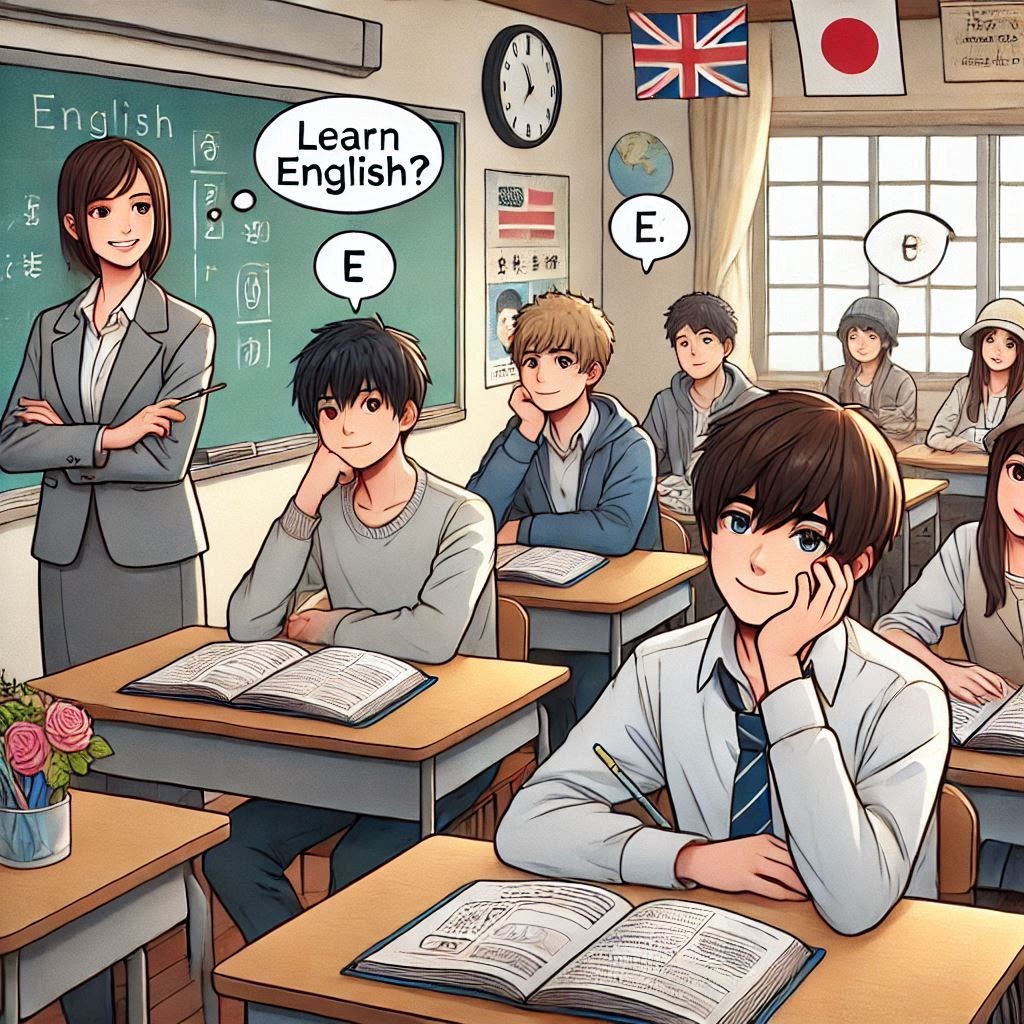
Why is Japanese English Efficiency level very low compared to other developed nations.

Why Does the English Education System in Japan Fail to Create English Speakers?

Let’s dive into the topic of English education and its overall presence in Japan. In Japan, English is taught from elementary school through high school, much like in many other countries worldwide. However, a recent study by the Japanese subsidiary of a Swiss international education company revealed some disheartening statistics: Japan ranked 92nd out of 116 countries where English is a second language. This year’s ranking marked a new low, dropping from 87th place the previous year.

Given such results, many might wonder how a country known for its unique and highly successful education system struggles to equip its citizens with English proficiency as a second language.

Before we seek the reasons behind this issue, let’s examine some telling statistics about English in Japan. According to data shared by Eric Magolic on EP:

"Studies estimate that less than 30 percent of Japanese speak English at any level at all. Less than 8 percent, and possibly as little as 2 percent, speak English fluently. For comparison, in Germany, roughly 60 percent of the population speaks English, and 16 percent of speakers say they are proficient."

Looking at Japan’s closest neighbor, South Korea, around 30 percent of the population speaks English, while approximately 16 percent of Chinese citizens speak English. However, when we consider fluency levels across these countries, including Japan, English proficiency remains low overall.

Why is speaking and understanding English so vital in today’s globalized world? Approximately 1.5 billion people speak English, making it a universal medium of communication. It plays a critical role in business, trade, education, research, and countless other fields. Knowing English opens doors to travel and connection, even in remote rural areas where English can serve as a bridge for communication.

Now, let’s explore why English education in Japan struggles and why its English proficiency levels have hit an all-time low. The insights I’ll share are based on my experiences as an ALT (Assistant Language Teacher) in Japanese public schools.

1. Frequency of English Class.

One of the first things I noticed was the frequency of English classes per week for each grade. Each grade has only one English class per week. This low frequency gives the impression that English is not as important as core subjects like math or science. Additionally, having English classes just once a week makes students feel less motivated to engage with the subject. It’s reminiscent of my experience back home, where we had religious education once a week—a class most students disliked and avoided.

Another challenge is that the infrequent classes lead to students completely forgetting what they learned the previous week. Since English lessons rely heavily on memorization, it becomes difficult for students to retain even simple phrases. For example, you might spend 45 minutes teaching the phrase, “How was your weekend? My weekend was great.” But when you return the following week and ask the same question, almost all the students will have forgotten the phrase.

2. Content of English Lesson.

The content of English taught to students, particularly at the elementary level, is incredibly shallow and ineffective for fostering real language learning. The structure of the English textbook is a major issue. It repeats the same phrases across nearly every chapter, offering little variety or depth.

While I understand that the goal at the elementary level is to develop children’s listening skills and familiarize them with English, the teaching methods fall far short of achieving this. The listening exercises at the beginning of each textbook lesson are particularly challenging for most students. From my observations, students can only associate specific words with pictures but fail to comprehend the overall conversation or audio being played. Even the songs they sing and the games they play often don’t make sense to them. As a result, there is a significant disconnect between the real-life use of English in conversations and what the textbook attempts to teach.

In my opinion, this gap is one of the most significant flaws in the current approach to English education. After four years of English lessons in elementary school, students’ conversational skills remain almost nonexistent. Despite the time spent, their ability to engage in real English conversations is virtually zero.

3. Learning English like Japanese.

Another challenge I observed in English education in Japan is the approach to learning the language. Students are being taught English as if it were their native language, focusing on memorization and pronunciation. However, Japanese students often struggle with pronouncing English words correctly. If English were taught as a second language, tailored to their needs, I believe we could see significant improvement at an earlier age.

Coming from a country where English is learned as a second language alongside over 800 native languages, I can see a stark difference in teaching methods. In our elementary schools, children might rarely speak English initially, but the focus is on teaching English structures, grammar, and reading. These foundational elements help students quickly develop essential skills for using English in real-world contexts. Moreover, English is treated as a core subject and taught daily, just like other key subjects. As a result, by the end of elementary school, all students are capable of reading and writing in English, even if their spoken proficiency varies.

In Japan, I believe English education at the elementary level needs a major overhaul. The textbooks should be redesigned to include real-world English grammar, reading comprehension, and language structures. Incorporating these elements into daily lessons would significantly enhance students' English skills. With these improvements, more Japanese students would be able to speak and understand practical English effectively.

4. Focus too much on getting the accent right and not on the essence of the  English language.

From my observation, English learning in Japan places an excessive emphasis on mastering the accent. While I understand the importance of pronunciation, I believe the real focus of teaching English should be on the essence of the language—communication—rather than trying to impress others with a perfect accent. In many countries where English is learned as a second language, the focus is on understanding and using the language effectively, rather than achieving a specific accent.

That said, I do recognize that Japanese learners often struggle with English pronunciation, so practicing correct pronunciation is important. However, prioritizing a particular accent, such as the American accent, can lead to a narrow understanding of English. It may hinder comprehension when encountering speakers from other countries with different accents. This approach undermines the true purpose of English: facilitating communication regardless of how it is spoken.

5. The lesson is focused on running with time and a schedule, leaving no space for the addition of ideas or new ways of learning.

 I find it fascinating that Japanese society is deeply obsessed with time. Everything operates with precision, and when I say "on time," I mean exactly on time. As someone from a different culture, my perspective might be biased, but this strict adherence to schedules seems to leave little room for innovation or creativity, especially in teaching English to kids. Teachers often focus solely on meeting the scheduled hours and ensuring they cover every aspect of the textbook on time. This approach leaves very little opportunity for creative lesson delivery or incorporating new ideas into the classroom.

In a society where falling behind is not an option and everyone is expected to move forward relentlessly, this rigid structure poses significant challenges for learning English. English education often becomes less about fostering communication skills and more about passing exams to enter higher institutions. Combined with tight schedules and a lack of flexibility to enhance textbook lessons with new or engaging methods, English learning in Japan becomes an uphill battle.

As a result, many students see English not as a tool for global communication but as a subject they need to pass. This mindset, paired with a rigid system, makes it even harder for students to truly grasp and use English in meaningful ways. Without the freedom to explore beyond the textbook, the potential for students to learn English as a means of connecting with the world remains largely untapped.

6. Japanese use in teaching English.

I don’t want to sound overly critical, but most classes in Japanese schools, especially at the elementary level, are conducted almost entirely in Japanese. This approach makes learning English more difficult because early English education should focus on listening and practicing basic words and phrases. How can kids develop these essential skills if English is primarily taught in Japanese?

In one of my classes with a Japanese English teacher, the students actually requested to be taught entirely in English. However, this proved challenging because the teacher struggled to explain concepts clearly in English. This limitation highlights a significant obstacle in developing English proficiency at an early age.

That said, I have noticed some progress in classes where teachers use 20-30% English for instructions and conversations. Initially, the kids might not understand everything, but I’ve observed that when teachers consistently incorporate English into their lessons, the students gradually begin to grasp the language more effectively. Persistence in using English, even in small doses, can make a meaningful difference over time.

7. teaching English at a comfortable stage. No challenges are given to kids.

I’ve had the opportunity to teach English alongside several teachers, and while many are excellent, I’ve noticed that some are reluctant to step out of their comfort zones. These teachers often avoid introducing new ideas into their lessons, even when those ideas align perfectly with the larger topic being taught.

For instance, in a 3rd-grade English class, the kids were learning about weather. The textbook listed only four types of weather: sunny, cloudy, rainy, and windy. One day, I tried to expand on this by introducing additional weather terms, but the teacher quickly shut down the idea, saying it wasn’t a good approach. To my surprise, the teacher explained that the kids didn’t know those words. However, I felt this hesitation was more about the teacher’s own comfort zone rather than the students’ abilities. It became clear to me that English was being taught in the easiest and most familiar way for the teacher, rather than challenging the students with new ideas and skills.

This made me reflect: isn’t education supposed to be about learning new concepts, skills, and ideas? Why would a teacher resist introducing fresh material and instead stick rigidly to their comfort zone? I suspect this reluctance stems from a broader cultural mindset in Japan, where new ideas must be carefully planned and decided upon in black and white. Many people prefer to avoid surprises or deviations from the norm, and this mindset seems to carry over into the classroom.

This cultural tendency makes teaching English more challenging, as teachers often hold back from introducing new concepts or approaches. In doing so, they limit students’ opportunities to explore and learn English more freely. It’s as if the teacher’s reluctance creates a barrier, preventing students from fully engaging with the language and expanding their skills.

8. The teacher can't encourage students to go beyond the textbook vocabulary and phrases to challenge students

One thing I’ve observed in English classes is the lack of challenges presented to students. Teachers often hesitate to go beyond the textbook and introduce new ideas or phrases that make conversations feel more natural. Instead, they stick rigidly to a single phrase for the entire 45-minute lesson. For instance, a typical target phrase might be: “What is your favorite food?” with the expected response: “My favorite food is sushi.” And that’s where it ends.

How can students truly learn real-world English if this is the only phrase they’re exposed to in a 45-minute lesson or even an entire week?

English teachers should aim to expand these lessons and make them more dynamic and engaging. For example:

What is your favorite food?
“Hmmm… My favorite food is sushi. Sushi is delicious and comes in so many varieties. My favorite sushi is tuna with a sprinkle of salmon roe on top. Whenever I eat it, I feel so happy and satisfied.”

This kind of exchange not only makes the conversation feel more real but also introduces students to new vocabulary and sentence structures. Teachers should strive to be creative and encourage students to explore beyond the set phrases in the textbook.

Unfortunately, teaching English this way is a significant challenge. Many teachers feel restricted by the textbook and are reluctant to step outside their comfort zones. This rigid adherence to the textbook structure makes it difficult for students to develop real conversational skills or engage with English in a meaningful way.


Author: Joshua .S

Japan's Fear of Immigration.

Creating a strict policy on immigration, is it based on fear or fact? In many places around the world recently, we have seen countries takin...